
What Is PEMF Therapy and Why Are So Many People Trying It?
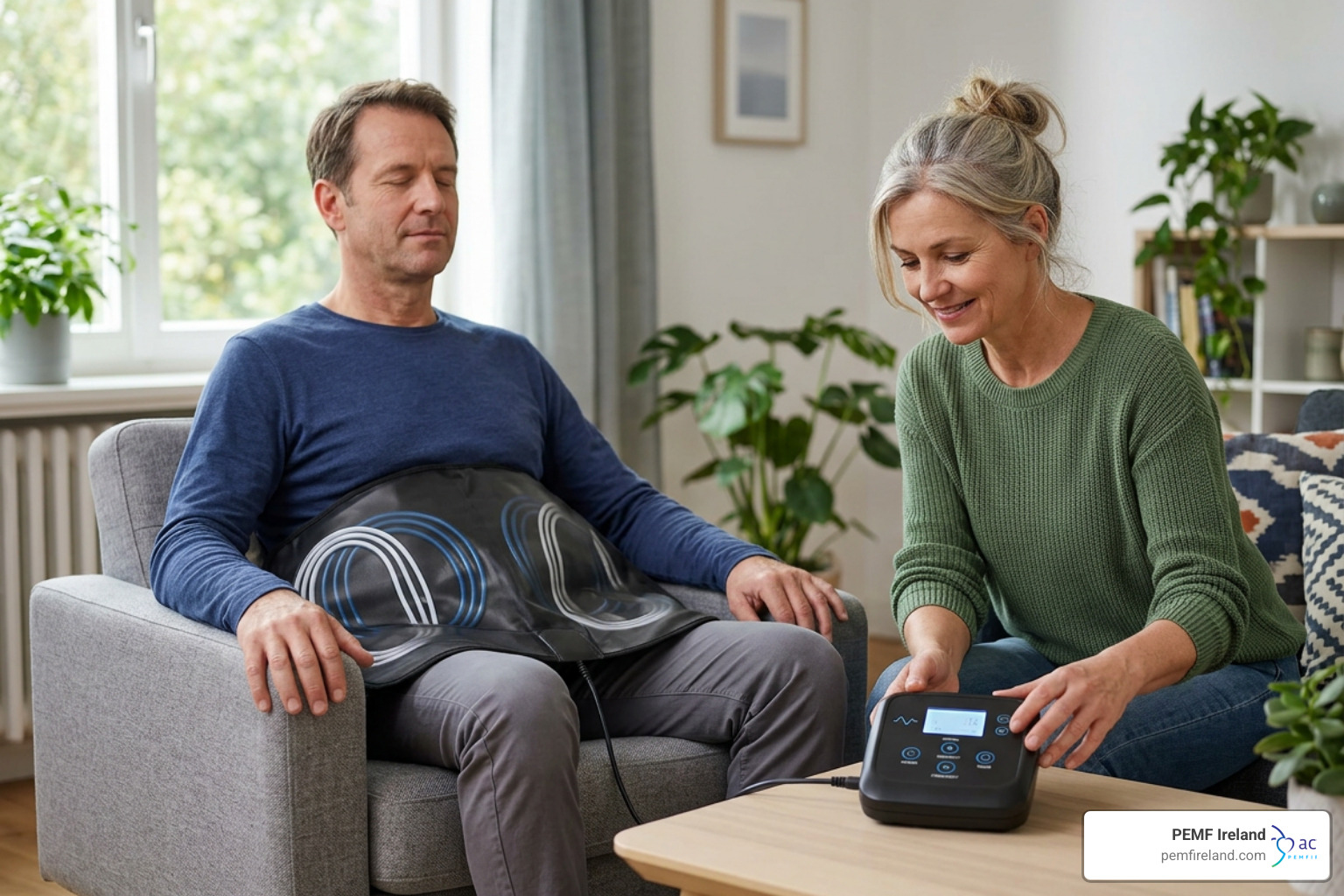
PEMF pulsed electromagnetic field therapy is a non-invasive treatment that sends low-level electromagnetic pulses through your body to support healing at the cellular level.
Here’s a quick overview of what you need to know:
| Topic | Quick Answer |
|---|---|
| What it is | Electromagnetic pulses delivered through coils to stimulate cells |
| How it works | Induces tiny electrical changes in cells, improving energy, circulation, and repair |
| Main benefits | Pain relief, better sleep, faster recovery, reduced inflammation |
| Who uses it | People with chronic pain, fatigue, joint conditions, or poor recovery |
| Is it safe? | Yes, for most people — non-invasive with no significant side effects |
| FDA status | Approved for non-union fracture repair since 1979; other uses vary |
If you’re dealing with chronic pain, low energy, or slow recovery — and you’re tired of relying on medication — you’re not alone. Millions of people worldwide are looking for drug-free, non-invasive ways to feel better.
PEMF therapy has been researched for over 30 years. It’s used in clinical settings, sports recovery, and home wellness. And interest is growing fast.
The science behind it is rooted in basic physics. Your cells carry electrical charge. When that charge drops — due to stress, injury, aging, or illness — your body struggles to repair itself. PEMF therapy essentially acts like a recharge for your cells.
As one widely cited definition puts it, PEMF therapy is “a treatment that utilizes low levels of an electromagnetic field pulsed through tissue to promote healing and relieve pain.”
This guide walks you through everything you need to know — from the science to the evidence to practical use.
Understanding the Science of a PEMF Pulsed Electromagnetic Field
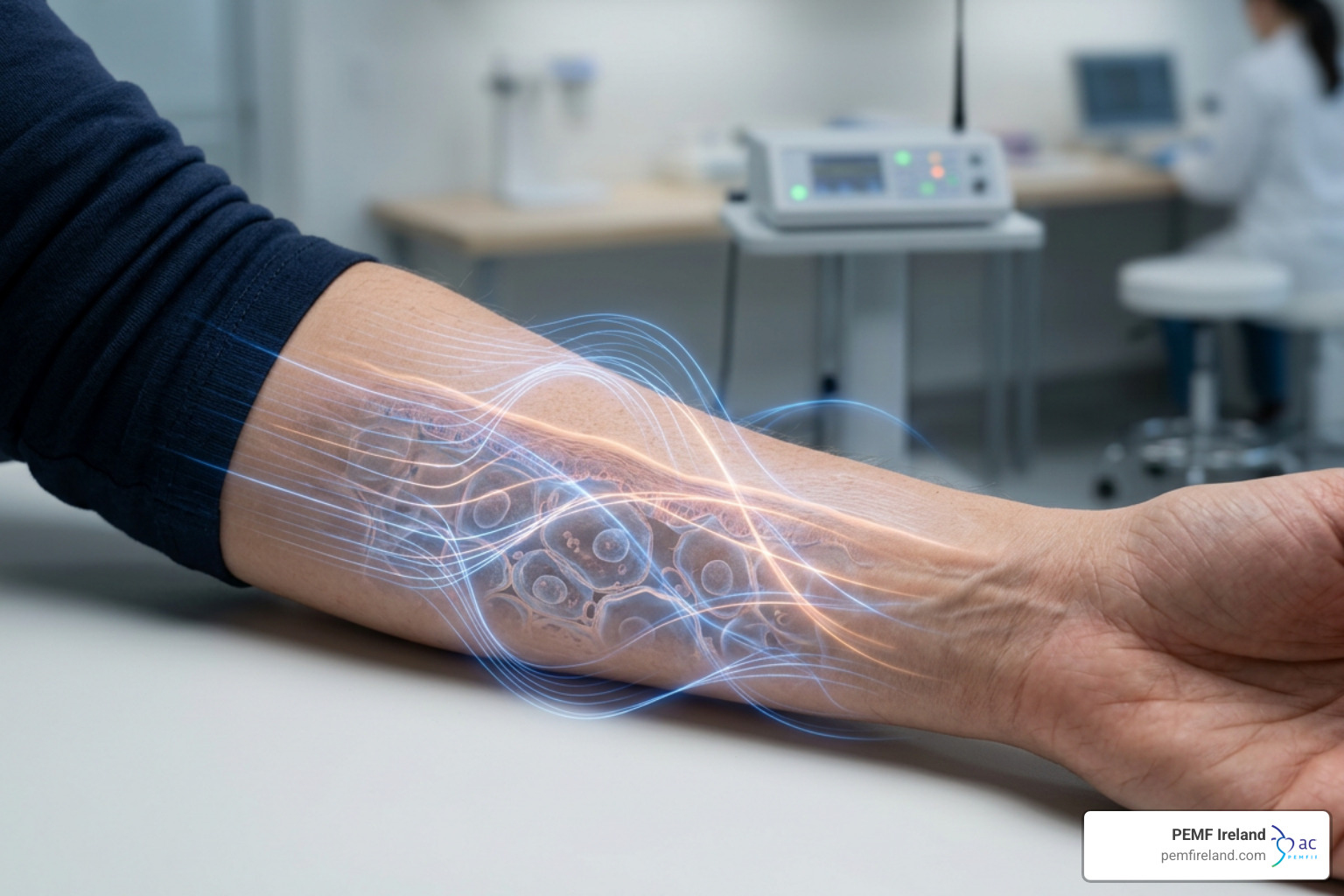
To understand how a pemf pulsed electromagnetic field works, we have to look at the fundamental physics of the human body. We aren’t just a collection of bones, muscles, and organs; we are electromagnetic beings. Every heartbeat, nerve signal, and cellular chemical reaction relies on electrical currents.
This brings us to Faraday’s Law of Induction. In simple terms, Faraday’s Law states that a moving or changing magnetic field will induce an electrical current in any conductive material it passes through. Because human tissue is highly conductive (thanks to water, salt, and ions), when we apply a pulsing magnetic field to the body, it safely induces tiny, therapeutic electrical microcurrents deep within our tissues.
This isn’t a modern human invention; it’s a biological necessity. For millions of years, human biology evolved in tandem with the Earth’s natural magnetic fields. These include the Schumann Resonances (vibrating at a fundamental frequency of 7.83 Hz, driven by the millions of lightning strikes that ring the Earth-ionosphere cavity daily like a musical instrument) and geomagnetic frequencies (ranging from 0 to 3 Hz).
Historically, our ancestors were constantly in contact with these fields. Today, however, we spend our lives in concrete and steel buildings, walking on asphalt, and surrounded by “electrosmog” from Wi-Fi and power lines. We are essentially living in a state of magnetic deficiency. Groundbreaking “zero-field” studies—where researchers placed subjects in magnetically shielded environments—showed that when humans are completely deprived of Earth’s magnetic fields, their physical and mental well-being rapidly deteriorates. Reintroducing these natural frequencies reverses these symptoms, which is why early space programs (like the Russian Mir Space Station) began using magnetic field generators to keep astronauts healthy in orbit.
How a PEMF Pulsed Electromagnetic Field Recharges Your Cells
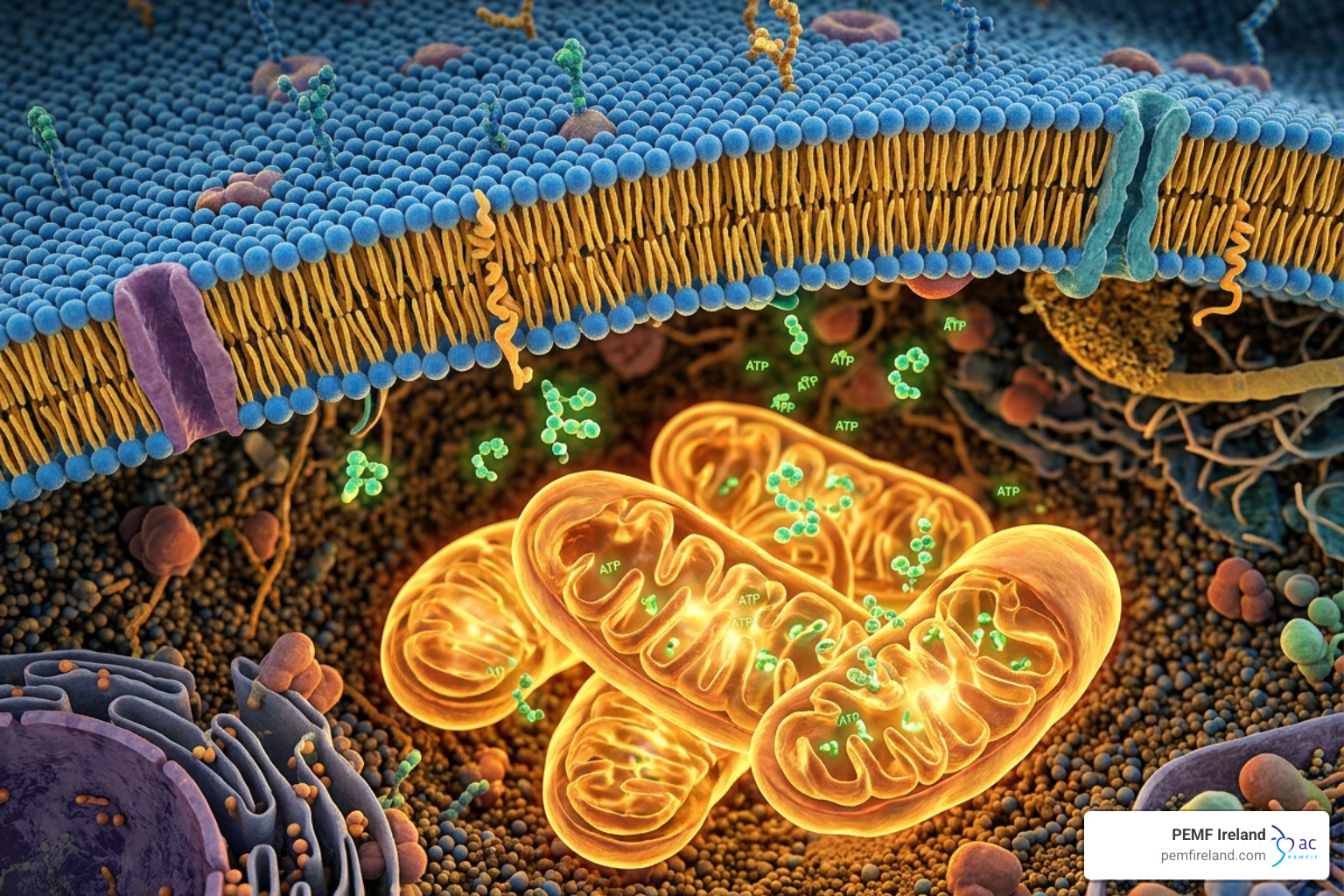
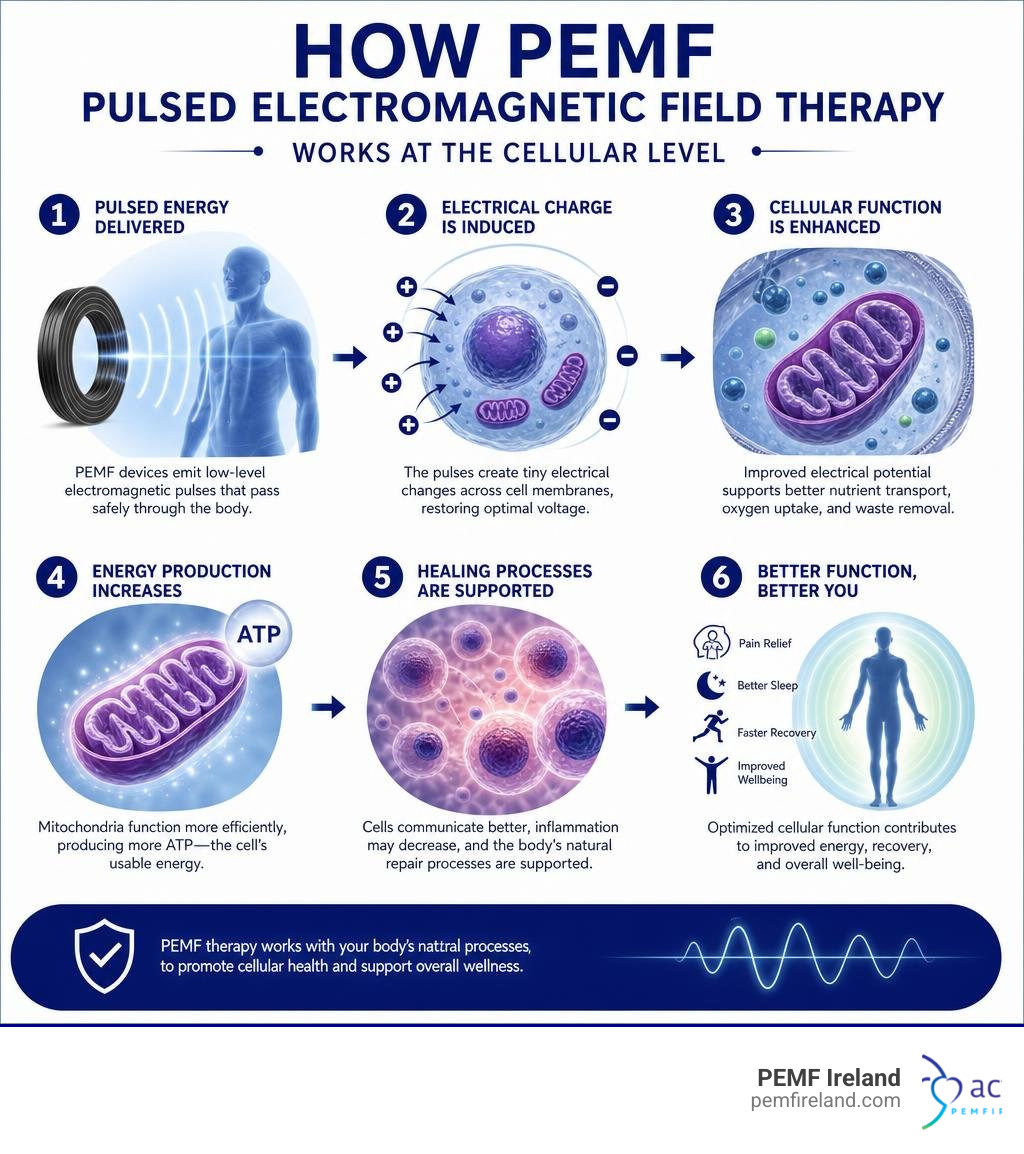
So, what happens inside your body when these pulses pass through? Think of your cells as tiny, rechargeable batteries. A healthy cell maintains a transmembrane potential (voltage) of approximately -70 to -90 millivolts (mV). When a cell becomes damaged, inflamed, or oxygen-deprived, this voltage drops—sometimes to as low as -30 mV in chronic disease states. A cell with low voltage cannot efficiently absorb nutrients, eliminate waste, or repair itself.
When we apply a pemf pulsed electromagnetic field, the induced microcurrents recharge the cell membrane, restoring its optimal voltage. This voltage restoration triggers several crucial biological events:
- Enhanced ATP Production: Adenosine triphosphate (ATP) is the universal energy currency of your cells. PEMF stimulates the mitochondria (the cellular powerhouses) to produce more ATP, giving your body the fuel it needs to accelerate healing.
- Optimized Ion Transport: The pulsing field opens up voltage-gated cell membrane channels, improving the flow of essential ions like calcium, sodium, and potassium. This boosts cellular metabolism and waste removal.
- Nitric Oxide Release: PEMF triggers the release of nitric oxide, a powerful vasodilator. This dilates blood vessels, improves microcirculation, and enhances tissue oxygenation.
- Inflammation Resolution: By modulating inflammatory mediators and cytokines, PEMF helps shift the body from a chronic pro-inflammatory state to a healing, anti-inflammatory state. To dive deeper into how this works, you can read more about PEMF Therapy or review the Scientific research on inflammation modulation.
Choosing the Right Waveform for a PEMF Pulsed Electromagnetic Field
Not all PEMF devices are created equal. The therapeutic outcome of your sessions depends heavily on the specific parameters of the electromagnetic pulse, most notably the waveform and the slew rate.
The waveform refers to the shape of the pulse. While some devices emit basic sine waves, the “gold standards” in clinical PEMF design are the Square Wave and the Sawtooth Wave:
- The Square Wave: Famous for its rapid rise and fall times, the square wave was heavily researched by NASA for its ability to stimulate tissue regeneration and gene expression. Because it switches on and off almost instantaneously, it creates a highly dynamic electrical induction in the body.
- The Sawtooth Wave: Characterized by a rise that mimics a saw blade, the sawtooth wave contains a vast spectrum of harmonic frequencies. This allows it to resonate with many different cell types simultaneously, making it ideal for full-body wellness and systemic microcirculation support.
The magic behind these shapes lies in the slew rate—the speed at which the magnetic field reaches its peak intensity. According to Faraday’s Law, the faster the magnetic field changes, the stronger the induced electrical current in the cells. A slow-rising wave might pass through the body unnoticed, whereas a high-slew-rate square or sawtooth wave delivers a clean, sharp pulse that effectively “wakes up” cellular receptors. To explore advanced systems utilizing these gold-standard waveforms, take a look at our range of Products.
Primary Health and Wellness Benefits of PEMF
Because PEMF works at the basic cellular level, its benefits are incredibly broad. Rather than target a single symptom, it supports the body’s natural self-healing mechanisms. Today, over 1,000,000+ annual PEMF therapy sessions are delivered globally to help individuals manage pain, accelerate wound healing, recover from intense athletic training, and combat delayed-onset muscle soreness (DOMS).
Whether you are an elite athlete trying to bounce back from an intense training camp or someone living with chronic joint discomfort, PEMF can play a vital role. You can explore our dedicated articles on these diverse applications in our PEMF Therapy Category.
Osteoarthritis and Joint Pain Relief
Osteoarthritis (OA) is one of the most common causes of chronic pain and disability. In an osteoarthritic joint, the protective cartilage slowly wears away, leading to friction, pain, and chronic inflammation.
PEMF therapy addresses OA through a multi-pronged approach:
- Preserving Cartilage: Studies suggest that PEMF can stimulate the proliferation of chondrocytes (the cells that build cartilage) and protect the joint matrix.
- Reducing Inflammatory Cytokines: It limits the catabolic (destructive) effects of pro-inflammatory cytokines like interleukin-1 beta (IL-1β) and tumor necrosis factor-alpha (TNF-α), while promoting anti-inflammatory cytokine release.
- Improving Joint Function: Meta-analyses show that PEMF therapy can have clinically significant benefits for pain, stiffness, and physical function in osteoarthritis.
For a comprehensive breakdown of how low- and high-intensity magnetic therapies stack up for musculoskeletal issues, read this Clinical evidence on orthopedic pain systematic review. It highlights that combining magnetic therapies with active exercise produces superior functional outcomes compared to using either modality alone.
Bone Regeneration and Fracture Healing
One of the most well-established clinical applications of PEMF is in orthopedics, specifically for treating non-union fractures (breaks that refuse to heal on their own). When a bone breaks, the local electrical environment changes. PEMF mimics these natural electrical signals, stimulating osteoblasts (bone-building cells) to lay down new calcium and bone matrix.
The clinical evidence here is remarkably strong. For example, a randomized controlled trial investigating a related pulsing modality found that it reduced scaphoid fracture consolidation time to 43.2 ± 10.9 days versus 62 ± 19.2 days in the control group (p = 0.0055). By accelerating calcium ion influx and boosting local blood flow, PEMF helps patients get back on their feet much faster, reducing the physical and financial burden of prolonged casting.
How PEMF Differs from Surface-Level Wellness Modalities
If you have ever used a heating pad, a TENS machine, or a standard physical therapy ultrasound, you might wonder how PEMF differs. The key distinction lies in depth of penetration and mechanism of action.
Many common modalities only stimulate the surface of the skin or the shallow subcutaneous tissues. For instance, TENS (Transcutaneous Electrical Nerve Stimulation) works by sending electrical currents across the skin to temporarily block pain signals from reaching your brain. It acts like a digital band-aid; it masks the pain but does nothing to fix the underlying cellular damage.
PEMF, on the other hand, does not rely on skin contact or surface conduction. Because magnetic fields pass through clothing, bandages, and even plaster casts completely unimpeded, PEMF can penetrate up to 20 cm deep into the body. It works at the root cellular level, rebuilding energy and reducing inflammation from the inside out.
| Feature / Modality | PEMF Therapy | TENS | Heating Pads | Therapeutic Ultrasound |
|---|---|---|---|---|
| Primary Mechanism | Cellular voltage recharge, ATP & nitric oxide boost | Blocks nerve pain signals (gate control theory) | Vasodilation via superficial heat transfer | High-frequency sound wave thermal tissue heating |
| Penetration Depth | Deep (up to 20 cm); passes through bone and casts | Shallow (subcutaneous nerve endings only) | Very shallow (skin surface and outer muscle layer) | Medium (up to 5 cm in soft tissue) |
| Cellular Healing | Yes (restores transmembrane potential) | No (temporary symptom masking) | No (temporary circulation boost only) | Moderate (localized micro-vibrations) |
| Application Method | Non-contact coils, mats, or targeted wraps | Adhesive electrodes stuck directly to skin | Direct contact pad on the skin | Direct contact with conductive gel and wand |
| Sensory Sensation | Generally imperceptible or a gentle, relaxing pulse | Tingling, buzzing, or sharp electrical twitching | Constant warmth | Mild warmth or no sensation |
Safety, Contraindications, and Regulatory Status
As a non-invasive, drug-free physical therapy, PEMF has an exemplary safety profile. Decades of clinical use and academic research have shown that it has no significant adverse side effects. Some users report mild, temporary sensations like a gentle warmth, localized muscle twitching, or a deep sense of relaxation during their sessions, all of which resolve spontaneously.
However, because PEMF involves active electromagnetic fields, there are a few strict contraindications.
Common PEMF Contraindications:
- Pacemakers and Implanted Electrical Devices: The magnetic pulses can interfere with the battery or programming of pacemakers, defibrillators, or cochlear implants.
- Pregnancy: While there is no evidence of harm, clinical safety has not been definitively established for pregnant individuals, so we recommend avoiding it during pregnancy.
- Active Bleeding or Hemorrhage: Because PEMF significantly improves blood flow and microcirculation, it should not be used on anyone experiencing active, uncontrolled bleeding.
From a regulatory standpoint, PEMF technology has achieved solid medical recognition. The FDA cleared PEMF for non-union fracture repair back in 1979, and has since cleared it for treating post-operative pain, edema, depression, and certain brain tumors. In terms of public health coverage, the CMS (Medicare) covers electromagnetic stimulation for Stage III and IV chronic pressure ulcers, diabetic ulcers, arterial ulcers, and venous stasis ulcers that have failed to heal after 30 days of standard wound care.
To learn more about our commitment to bringing safe, cutting-edge wellness solutions to our clients in Ireland, read About Us.
Frequently Asked Questions About PEMF Therapy
Who should avoid PEMF therapy?
As mentioned above, anyone with an implanted electrical device (like a pacemaker or insulin pump), pregnant individuals, and those with active bleeding disorders should avoid PEMF. If you have metal implants (like hip replacements or surgical screws), PEMF is generally safe, as the magnetic fields do not heat up medical-grade titanium or stainless steel implants the way MRI machines do. However, always consult with your physician before beginning any new therapy.
How long does a typical PEMF session take to show results?
A standard session with our high-intensity systems takes just 30 minutes. For acute issues, like muscle soreness or minor injuries, you might feel a noticeable reduction in pain and stiffness immediately after your first session. For chronic conditions like osteoarthritis or bone healing, the effects are cumulative. Most clients begin to see substantial, lasting improvements in pain, mobility, and energy levels after 2 to 4 weeks of regular sessions.
Is PEMF therapy backed by clinical research?
Yes, absolutely. PEMF is one of the most thoroughly researched physical modalities in modern wellness technology. There are thousands of peer-reviewed studies, randomized controlled trials (RCTs), and systematic reviews published on PubMed. It is even featured in major clinical trials by institutions like the Mayo Clinic, which has investigated its vascular health benefits in metabolic syndrome populations. While some historical studies suffered from parameter inconsistencies, modern medical consensus increasingly recognizes PEMF as a highly effective, safe, and cost-efficient alternative to long-term pain medications.
Conclusion
At PEMF Ireland, we are dedicated to helping you unlock your body’s innate healing potential. We supply state-of-the-art, high-intensity PEMF therapy systems designed to recharge your cells, soothe chronic pain, and dramatically reduce inflammation.
What sets us apart is our unique, industry-leading approach. Our advanced systems combine 10 integrated technologies designed to deliver 145+ beneficial physiological responses in a single, comfortable 30-minute session. Best of all, we don’t just hand you a device; we back every system with ongoing clinical support to ensure you get the absolute best results.
Ready to experience the power of a cellular recharge? Contact Us today to learn more, or visit our Home page to explore our range of cutting-edge wellness solutions. Let’s get your body’s batteries fully charged!