
Why Pulsed Electromagnetic Treatment Is Getting Serious Attention From Modern Medicine
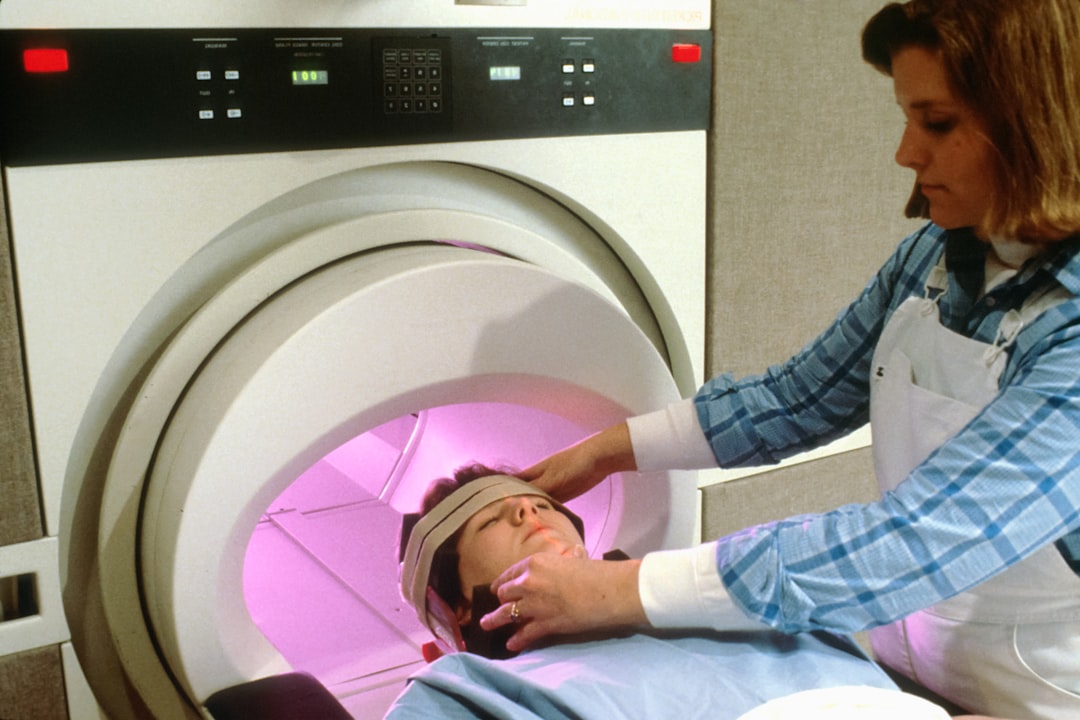
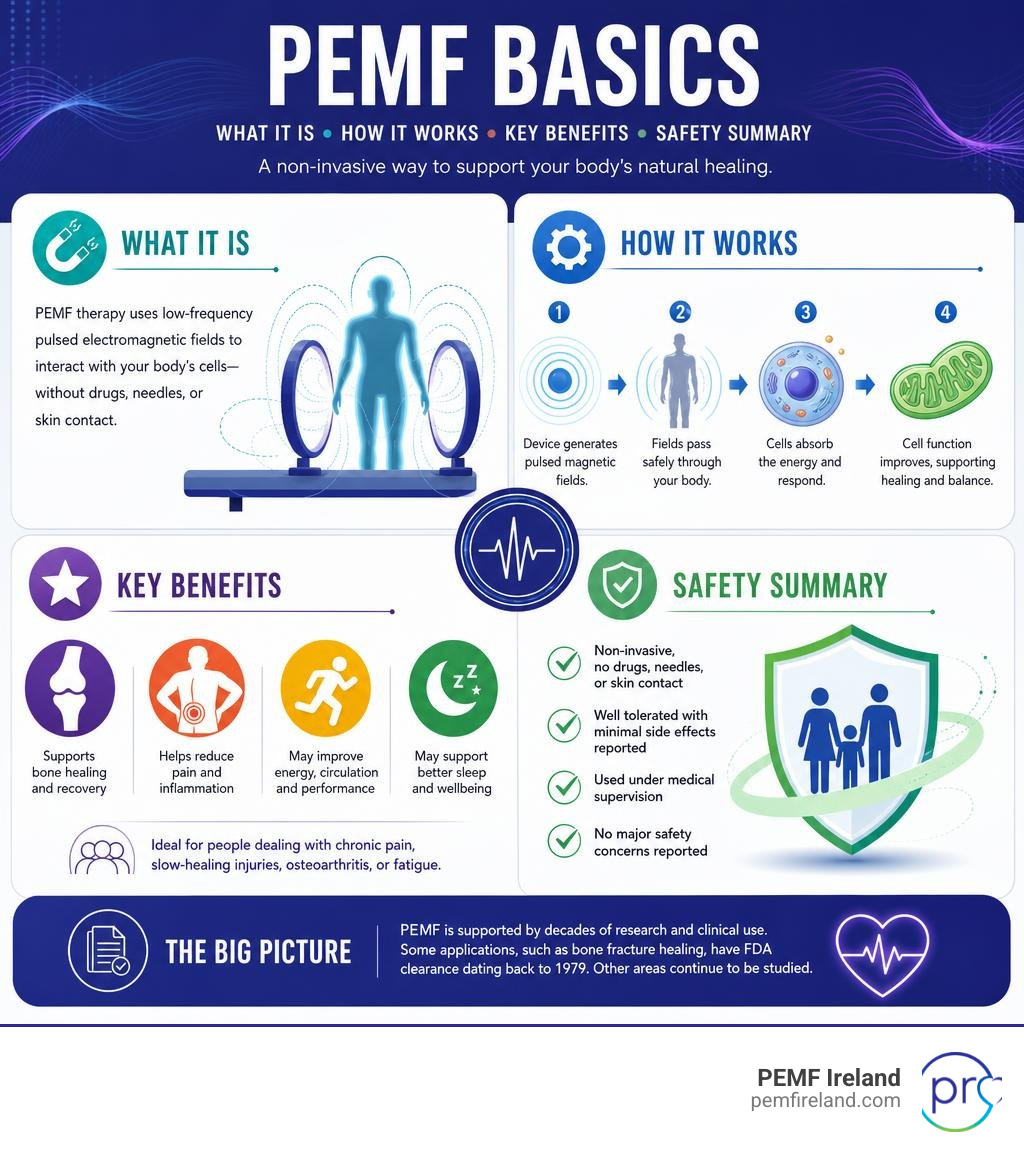
Pulsed electromagnetic treatment is a non-invasive therapy that uses low-frequency electromagnetic fields to stimulate healing at the cellular level — without drugs, needles, or skin contact.
If you’re trying to understand it quickly, here’s the short version:
- What it is: A device generates pulsed magnetic fields that pass through your body and interact with cells
- What it does: Supports bone healing, reduces pain and inflammation, and may improve energy and sleep
- Who it’s for: People dealing with chronic pain, slow-healing injuries, osteoarthritis, or fatigue
- Is it safe? Generally yes — used under medical supervision with no major safety concerns reported
- Is it proven? Some applications (like bone fracture healing) have FDA clearance dating back to 1979; others are still being studied
For decades, this therapy lived mostly in specialist clinics. But as the evidence has grown — and as more people look for drug-free alternatives to managing pain and recovery — PEMF has moved steadily into mainstream healthcare conversations.
The core idea is simple: your cells respond to electromagnetic signals. When injury, illness, or aging disrupts that signalling, PEMF may help restore it.
This guide breaks down exactly how it works, what conditions it helps, what the science actually says, and what you need to know before trying it.
What is PEMF and How Does It Work at the Cellular Level?
To understand how pulsed electromagnetic treatment works, we have to shrink our perspective down to the microscopic level. Every single cell in your body is essentially a tiny battery. They maintain a specific electrical charge across their membranes—known as the transmembrane potential—which is vital for letting nutrients in and flushing waste products out.
When tissues are damaged, inflamed, or worn down by chronic illness, this electrical potential drops. The cellular “battery” loses its charge, slowing down cellular metabolism and impairing the natural healing process.
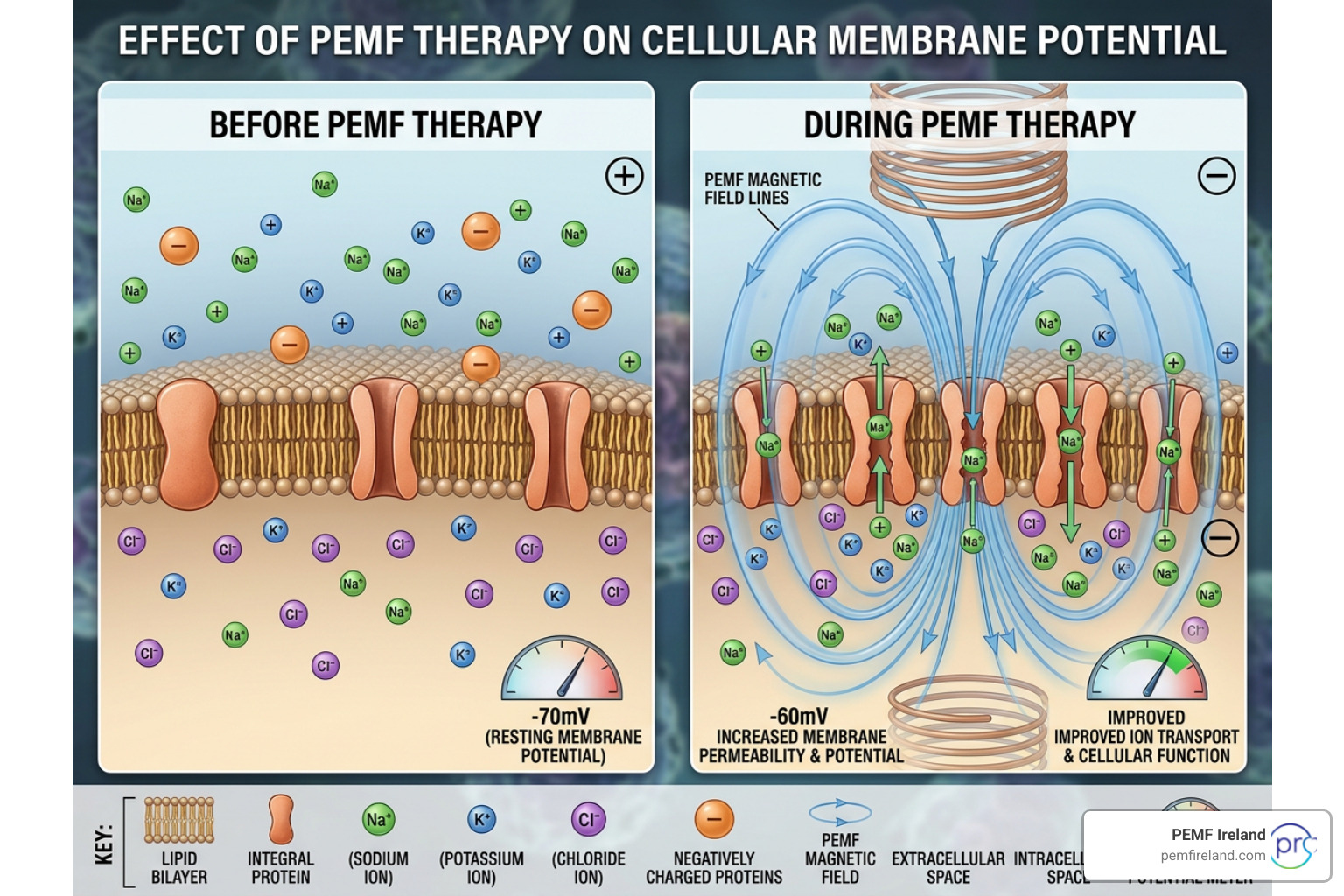
This is where pemf therapy steps in. By passing low-frequency, non-ionizing, and nonthermal electromagnetic fields through the body, we can induce tiny, safe electrical currents within the tissues. This process helps to restore the optimal transmembrane potential, essentially recharging your cells so they can function efficiently.
At the molecular level, these electromagnetic pulses act as a physical stimulus that cells can detect. Instead of directly depolarizing membranes the way high-voltage electrical stimulation does, PEMF operates through amplification mechanisms at transmembrane receptors.
Research indicates that these fields act as agonists for specific receptors, most notably the A2A and A3 adenosine receptors. When these receptors are stimulated, they trigger a cascade of anti-inflammatory signals, modulating key inflammatory mediators like COX-2, IL-1β, and TNF-α.
Furthermore, this stimulation enhances ion flow—particularly calcium ions—across the cell membrane. This shift boosts cellular metabolism, stimulates the production of Adenosine Triphosphate (ATP, the cell’s energy currency), and upregulates growth factors involved in tissue repair. For a deeper dive into these complex biological pathways, you can explore the underlying cellular healing mechanisms that drive these therapeutic outcomes.
Clinical Applications of Pulsed Electromagnetic Treatment
Because electromagnetic fields can pass completely through clothing, skin, and bone without losing their strength, we can use them to target deep-seated tissues. This makes pulsed electromagnetic treatment an incredibly versatile tool for treating a wide variety of musculoskeletal and neurological disorders.

Rather than merely masking symptoms, this therapy aims to support the body’s natural regenerative processes. If you are curious about how these devices are applied in clinical practice across the country, you can read more about pemf pulsed electromagnetic field ireland to see how we integrate these systems into comprehensive recovery programs.
To understand why this technology has become a cornerstone of modern physical rehabilitation, we should look at the latest clinical evidence. A comprehensive overview of how magnetic fields are utilized for pain relief can be found in this systematic review on the clinical efficacy of magnetic therapies, which highlights how both low- and high-intensity fields contribute to patient recovery.
How Pulsed Electromagnetic Treatment Accelerates Bone Healing
One of the most scientifically robust and historically established uses of PEMF is in the field of orthopedics, specifically for bone repair. Under normal circumstances, bones heal remarkably well. However, about 5% to 10% of fractures develop delayed union (healing much slower than expected) or nonunion (failing to heal entirely).
For patients facing the painful prospect of secondary surgeries or bone grafts, PEMF therapy offers a highly effective, non-invasive alternative. Clinical research shows that PEMF therapy for nonunion fractures achieves overall healing success rates ranging from 68% to 90%.
Timing is everything. Introducing this treatment early in the recovery process yields significantly better results. In clinical trials, early PEMF application for delayed union fractures achieved a 77.4% success rate compared to just 48.1% in control groups who received standard care alone. This suggests that clinicians should consider PEMF as soon as a delayed union is suspected (often around 16 weeks post-injury) rather than waiting for an established nonunion to develop.
The success of bone healing is also heavily dependent on the daily “dose” of electromagnetic exposure. The relationship between treatment duration and healing speed is striking:
- Increasing the daily PEMF treatment time by just one hour can reduce average healing time by 6 days.
- Patients who treated their fractures for 9 or more hours per day healed, on average, 76 days earlier than those who used the device for 3 hours or less per day.
- The median healing time can be reduced by 35% to 60% when comparing a 10-hour daily treatment protocol to a minimal 1-hour protocol.
For those interested in the deep clinical data supporting these findings, the peer-reviewed bone consolidation research provides an extensive look at the radiological and clinical outcomes of electromagnetic bone stimulation.
Pulsed Electromagnetic Treatment for Chronic Pain Management
Chronic pain is a massive global health challenge, often leaving patients frustrated by the side effects or limited efficacy of conventional medications. Pulsed electromagnetic treatment is increasingly used to manage chronic low back pain, post-operative discomfort, and neuropathic pain.
In systematic reviews of chronic low back pain, patients using low-frequency PEMF reported average pain score reductions of 2 to 3 points on the Visual Analogue Scale (VAS). Additionally, functional disability scores—measured using the Oswestry Disability Index (ODI)—improved by 8 to 10 points.
How does this compare to other magnetic therapies? Repetitive Peripheral Magnetic Stimulation (rPMS) is a high-intensity cousin of PEMF. While low-intensity PEMF works through slow, cumulative anti-inflammatory pathways, high-intensity rPMS delivers magnetic fields strong enough to directly depolarize peripheral nerves and induce muscle contractions.
This high-intensity approach has shown rapid short-term analgesic effects, boasting a very large effect size (Cohen’s d = 1.56) in acute low back pain trials by activating descending inhibitory pain pathways. To understand the differences in how these peripheral nerves are targeted, you can read the clinical breakdown of peripheral magnetic stimulation protocols.
Osteoarthritis and Joint Health
Osteoarthritis (OA) is a leading cause of mobility loss and joint pain, particularly in the knees. While many treatments focus solely on reducing joint inflammation, recent clinical studies have explored a unique angle: using muscle-targeted PEMF to build strength around the failing joint.
A double-blind, randomized controlled trial evaluated patients with end-stage knee osteoarthritis who were awaiting total knee replacement (TKR). These patients often suffer from severe quadriceps muscle weakness, sometimes losing up to 35% of their extensor strength.
The study combined a home-based exercise program with a specific PEMF protocol: a 1 mT amplitude, 50 Hz frequency signal applied directly to the quadriceps for 10 minutes per session, twice a week, for 8 weeks.
The results were highly encouraging. The PEMF group showed significant improvements in extension and flexion muscle strength compared to those doing exercises alone. Furthermore, VAS pain scores dropped significantly in both groups, but the effect was substantially larger in the PEMF group.
Interestingly, the study revealed distinct demographic benefits:
- Older adults (over 70) and female patients showed the most pronounced improvements in muscle strength.
- Male patients experienced the greatest relative pain relief.
Combining targeted electromagnetic therapy with active physical therapy appears to offer a powerful synergistic effect for joint stability. You can find more details on how these magnetic fields interact with joint tissues in this resource on joint inflammation relief.
Treatment Parameters: Frequency, Intensity, and Waveforms
Not all electromagnetic fields are created equal. The therapeutic effect of a PEMF device depends entirely on its specific physical parameters. If a device uses the wrong frequency or waveform, the target tissue may not respond at all.
- Frequency: Most clinical PEMF devices operate at low frequencies, typically under 100 Hz, to mimic the natural electromagnetic frequencies of the earth and human biology.
- Intensity (Magnetic Flux Density): Low-intensity systems usually range from 0.1 to 30 mT (millitesla). In contrast, high-intensity peripheral simulators can reach several Teslas to achieve physical muscle contractions.
- Waveforms: The shape of the electromagnetic wave determines how energy is transferred to the tissue. Bassett’s sawtooth signal is one of the most famous and widely researched waveforms for bone healing. Quasi-rectangular and quasi-triangular waveforms are also frequently utilized and have received regulatory clearances for treating nonunion fractures.
| Parameter | Low-Intensity PEMF | High-Intensity rPMS / PMS |
|---|---|---|
| Typical Frequency | 1 – 100 Hz | 1 – 150 Hz (often delivered in bursts) |
| Magnetic Intensity | 0.1 – 30 mT (1 – 300 Gauss) | 0.5 – 3.0 Tesla (highly concentrated) |
| Primary Mechanism | Cellular signaling, anti-inflammatory, calcium ion transport | Axon depolarization, muscle contraction, nerve pathway modulation |
| Sensation | Usually imperceptible (no skin sensation) | Mild to strong muscle twitching, deep tapping sensation |
| Common Uses | Bone healing, chronic joint pain, systemic inflammation | Muscle rehabilitation, acute pain relief, spasticity |
Safety, Contraindications, and Side Effects
One of the greatest advantages of pulsed electromagnetic treatment is its excellent safety profile. It is widely considered safe when used under appropriate medical supervision, is highly tolerated by patients of all ages, and carries no major safety concerns.
However, because these devices emit powerful magnetic fields, there are strict contraindications that must be observed:
- Electronic Implants: Anyone with a pacemaker, implanted cardioverter-defibrillator (ICD), insulin pump, or other active electronic implant must avoid PEMF therapy. The magnetic field can interfere with the device’s programming or battery life.
- Pregnancy: While there is no direct evidence of harm, standard medical caution dictates that pregnant women (or those actively trying to conceive) should avoid PEMF exposure. Clinical operators who are pregnant should maintain a safe distance of at least 70 cm from active treatment coils.
- Active Fungal Infections: Interestingly, magnetic fields can sometimes accelerate the growth of certain fungi. Therefore, any active skin lesions should have fungal causes ruled out before applying PEMF directly to the area.
- Ferromagnetic Implants: While modern titanium joint replacements are generally safe, older implants containing ferromagnetic metals require caution as they can heat up or shift slightly under strong magnetic fields.
Side effects are rare and generally mild and transient. Some patients may experience a warm sensation in the treated area, mild muscle twitching (especially with higher-intensity protocols), or temporary fatigue as cellular metabolism increases.
Frequently Asked Questions about PEMF
How does PEMF compare to electrical stimulation?
Traditional electrical stimulation (like TENS) requires placing adhesive electrodes directly onto the skin. The electrical current must fight through the skin’s natural resistance, which can sometimes cause stinging, chemical burns, or discomfort.
PEMF, on the other hand, uses magnetic induction. Because magnetic fields pass through skin, clothing, and bandages without resistance, PEMF can penetrate deep into joints and bones without any direct skin contact or discomfort.
How long does a typical PEMF session last?
Session lengths vary wildly depending on the device and the condition being treated. Clinical sessions typically last between 10 and 30 minutes, whereas home-use devices designed for bone healing can be worn for several hours a day to accumulate a high daily therapeutic dose.
Is PEMF therapy FDA-cleared?
Yes, PEMF therapy has a long history of regulatory clearance. The FDA cleared its first PEMF device for the treatment of nonunion fractures back in 1979. Since then, various devices have received clearances for muscle stimulation, post-operative edema, and pain management.
Conclusion
Pulsed electromagnetic treatment represents a powerful, non-invasive frontier in modern wellness and physical rehabilitation. By working in harmony with your body’s natural electrical properties, it helps to kickstart healing processes that may have stalled due to injury, aging, or chronic inflammation.
At PEMF Ireland, we provide state-of-the-art, high-intensity PEMF therapy systems designed to recharge your cells and relieve persistent pain. Our unique medical wellness technology integrates 10 distinct therapeutic modalities into a single system, delivering over 145 physiological responses in an efficient 30-minute session.
Whether you are looking to accelerate recovery with our advanced hocatt system or explore our specialized clinical devices, we provide ongoing clinical support to help you achieve your recovery goals. Ready to experience the benefits of cellular recharge? Visit the PEMF Ireland Homepage to connect with our team and find a treatment protocol tailored to your needs.