
Why PEMF Therapy for Rheumatoid Arthritis Is Worth Understanding

PEMF therapy for rheumatoid arthritis is a non-invasive, drug-free approach that uses pulsed electromagnetic fields to reduce joint inflammation, ease pain, and support the body’s natural repair processes at the cellular level.
If you’re looking for a quick answer, here’s what the evidence shows:
What PEMF therapy can do for RA:
- Reduce pain and joint tenderness — double-blind clinical trials report up to 47% improvement in pain severity and range of motion
- Decrease morning stiffness — a 2023 study in 39 RA patients showed measurable reductions in stiffness duration and severity
- Lower inflammation markers — PEMF reduces key inflammatory signals including TNF-α, IL-1β, and IL-6 in joint tissue
- Improve hand and joint mobility — functional status improved alongside physical measures in clinical testing
- Support tissue repair — targets the cellular processes that drive cartilage and bone degeneration
- No known side effects — no adverse effects reported in clinical studies when used appropriately
Rheumatoid arthritis is one of the most debilitating forms of chronic joint disease. It’s an autoimmune condition — meaning your own immune system attacks the lining of your joints, causing inflammation, swelling, and over time, serious damage to cartilage and bone.
Living with RA often means cycling through medications, flare-ups, fatigue, and disrupted sleep. For many people, conventional treatments help — but they come with real costs and real risks. Biologics, for example, can run $1,000–$3,000 per month and carry risks of serious infection.
Chronic joint pain now affects more than 58 million adults in the US alone, with that number projected to exceed 78 million by 2040. That scale of suffering is driving genuine interest in non-pharmacological options that are both safe and evidence-backed.
PEMF therapy sits at an interesting intersection: it’s backed by a growing body of clinical and laboratory research, it’s non-invasive, and it works at the cellular level — not just masking symptoms, but influencing the biological processes that drive RA.
This guide explains how it works, what the science actually shows, and how it can fit into a realistic management plan for rheumatoid arthritis.
Understanding the Cellular Science of PEMF for Joint Degeneration
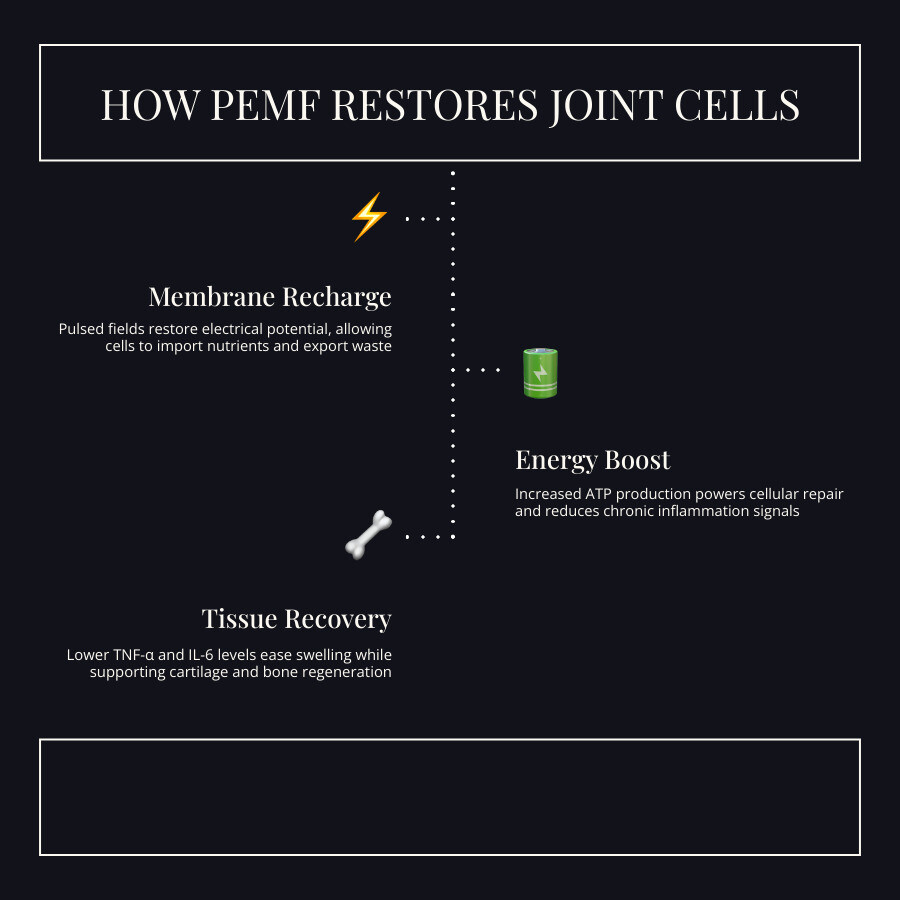
To truly appreciate how pulsed electromagnetic field technology changes the landscape of arthritis care, we have to look past the surface of the skin and peer directly into the joint’s cellular environment. When joints degenerate or face chronic autoimmune attacks, the electrical charge of individual cells drops. Healthy cells maintain a specific membrane potential that allows them to import nutrients, export waste, and generate energy. When stressed, injured, or inflamed, this electrical potential declines, leaving the cell struggling to function.
Think of your cells as tiny, rechargeable batteries. Over time, the constant drain of chronic inflammation depletes their charge. PEMF acts like a wireless charger for these cellular batteries. By passing gentle, low-frequency electromagnetic waves through the body, we can induce tiny electrical currents within the tissues. This process restores the natural electromagnetic balance of the cell membranes, kickstarting cellular repair and regeneration.
At the heart of this cellular recharge is the stimulation of Adenosine Triphosphate (ATP) production. ATP is the universal energy currency of our cells. When PEMF therapy increases ATP synthesis, it provides cells with the fuel they need to repair damaged proteins, rebuild cartilage matrix, and manage waste.
Furthermore, PEMF stabilizes cellular membranes by restoring plasma membrane Ca2+ ATPase activity. This action helps regulate calcium ion flow, which is crucial because uncontrolled calcium influx can trigger cell death and accelerate tissue breakdown. By stabilizing these channels, PEMF directly inhibits the biosynthesis of Prostaglandin E2 (PGE2) — a notorious lipid compound that drives pain and swelling in arthritic joints. Through these pathways, PEMF Therapy does not merely mask joint discomfort; it alters the bio-electromagnetic communication of the cells to encourage systemic healing.
Cellular Mechanisms of PEMF Therapy Rheumatoid Arthritis Relief
In rheumatoid arthritis, the immune system is locked in a state of hyper-reactivity. Immune cells flood the joint capsule, releasing a cascade of pro-inflammatory proteins called cytokines. This is where the targeted application of pemf therapy rheumatoid arthritis protocols shows profound therapeutic potential.
At the molecular level, PEMF exposure upregulates A2A and A3 adenosine receptors on the surface of inflammatory cells. Upregulating these receptors acts as a biochemical “brake” on the immune response. When these receptors are activated, they inhibit the translocation of Nuclear Factor-kappa B (NF-kB) — the primary genetic switchboard that turns on inflammatory genes.
By blocking NF-kB, PEMF systematically reduces the production of destructive pro-inflammatory cytokines, including:
- Tumor Necrosis Factor-alpha (TNF-α): The primary target of expensive biologic drugs.
- Interleukin-1 beta (IL-1β): A major driver of bone erosion and joint pain.
- Interleukin-6 (IL-6): A cytokine responsible for systemic symptoms and joint swelling.
This biological pathway is supported by compelling laboratory data. For instance, a landmark study published in early 2023 demonstrated that PEMF treatment significantly decreased paw inflammation and preserved joint morphology in a murine model of collagen-induced arthritis. The researchers noted that tissue protein levels of IL-1β, IL-6, TNF-α, and key bone-destroying markers like RANK and RANKL were all lowered in the PEMF-treated groups. For a deeper dive into the laboratory data, you can read the Scientific research on PEMF mechanisms in arthritis.
Targeting MSCs, Pericytes, and Fibroblast-Like Synoviocytes
The joint lining (synovium) in a healthy individual is thin and delicate. In RA, it transforms into a thick, aggressive tissue mass known as a pannus. This destructive transformation is driven by specialized cells called Fibroblast-Like Synoviocytes (FLS). In a diseased joint, FLS become hyperactive, invading surrounding cartilage and secreting enzymes that eat away at bone.
PEMF therapy introduces a biophysical stimulus that targets resident Mesenchymal Stromal Cells (MSCs) and pericytes (the helper cells wrapping around blood vessels) to alter this destructive cycle. MSCs possess incredible immunomodulatory and regenerative capabilities. Under normal conditions, the intense inflammatory soup of an RA joint paralyzes these stromal cells, stopping them from repairing tissue.
PEMF bypasses this paralysis. It stimulates MSCs, directing them to differentiate down chondrogenic (cartilage-producing) and osteogenic (bone-building) pathways. Simultaneously, it coaxes MSCs to release anti-inflammatory cytokines like Interleukin-10 (IL-10), which help pacify the aggressive FLS. By altering the behavior of FLS and empowering resident stem cells, PEMF helps restore a state of immunological tolerance within the joint capsule. To explore how this works, read the detailed Research on targeting MSCs with PEMF.
Clinical Evidence: How PEMF Therapy Rheumatoid Arthritis Protocols Reduce Joint Pain
While laboratory and animal studies provide an essential foundation, human clinical trials demonstrate how these physical forces translate into real-world relief. For decades, researchers have sought non-invasive ways to interrupt the chronic pain cycle of RA without adding to a patient’s chemical burden.
Double-blind, placebo-controlled clinical trials have shown that RA patients exposed to low-frequency PEMF protocols experience substantial clinical improvements. In these trials, patients receiving active PEMF therapy (typically using parameters of 5 Hz and 10–20 Gauss) for 10 to 30 minutes a day, 3 to 5 times a week, achieved up to a 47% improvement in pain severity, joint tenderness, and range of motion after just one month of treatment.
Importantly, these benefits were not fleeting; the positive outcomes of Pulsed Electromagnetic Treatment have been shown to persist for up to three months or longer after the treatment course concludes, providing a sustained window of relief.
What the Research Says About Pain, Stiffness, and Mobility
The daily reality of living with rheumatoid arthritis is often measured by the severity of morning stiffness and the simple ability to use one’s hands. A clinical study published in 2023 evaluated the effects of PEMF therapy on 39 RA patients. The results were remarkably encouraging: patients experienced a significant improvement in functional status, a sharp reduction in pain severity, a decrease in both the duration and severity of morning stiffness, and a measurable improvement in hand joint mobility.
These findings align with broader clinical evaluations of PEMF for joint pathologies. A comprehensive Meta-analysis on PEMF efficacy for joint pain analyzed 11 randomized controlled trials. The meta-analysis confirmed that PEMF therapy produces statistically significant improvements in pain, stiffness, and physical function across multiple joint sites.
Furthermore, maintaining surrounding muscle strength is vital for protecting unstable joints. Research published in a Clinical trial on muscle strength and pain demonstrated that combining PEMF therapy with targeted exercise significantly improves muscle strength and physical function compared to exercise alone, particularly in older individuals. By preserving the musculature around arthritic joints, patients can better distribute mechanical loads, leading to less wear and tear over time.
Restoring Angiogenic Homeostasis and Vascular Health
One of the lesser-known but highly destructive features of rheumatoid arthritis is dysfunctional angiogenesis — the rapid, chaotic growth of new blood vessels in the joint. In RA, the inflamed joint synovium becomes starved of oxygen (hypoxic). In a desperate bid to bring in oxygen, the body overproduces Vascular Endothelial Growth Factor (VEGF).
However, instead of helping, this uncontrolled blood vessel growth fuels the expansion of the invasive pannus, delivering more inflammatory immune cells directly into the joint space. This vascular dysfunction perpetuates the cycle of swelling and tissue destruction.
PEMF therapy helps restore angiogenic homeostasis. By modulating the signaling of endothelial progenitor cells and pericytes, PEMF helps normalize blood vessel growth. Instead of allowing chaotic, leaky vessel proliferation, PEMF promotes organized, healthy vascular networks that improve tissue perfusion and oxygenation without feeding the inflammatory pannus. Correcting this local hypoxia removes the primary trigger for VEGF overproduction, helping to cool down the inflamed joint lining and slow the progression of joint damage.
Comparing PEMF to Conventional Arthritis Treatments
Managing rheumatoid arthritis usually involves balancing the benefits of a therapy against its potential side effects. For many, the standard medical toolkit can feel like a double-edged sword. Let’s look at how PEMF compares to standard pharmacological interventions.
| Treatment Type | Efficacy for Pain & Inflammation | Primary Safety Concerns & Side Effects | Long-Term Cost & Accessibility | Mechanism of Action |
|---|---|---|---|---|
| NSAIDs (e.g., Ibuprofen) | Moderate (Temporary symptom masking) | Gastrointestinal ulcers, cardiovascular risks, kidney strain | Low cost, easily accessible over-the-counter | Inhibits COX enzymes to block pain signals |
| DMARDs (e.g., Methotrexate) | High (Slows disease progression) | Liver toxicity, bone marrow suppression, hair loss, nausea | Moderate cost, requires regular blood monitoring | Systemic immunosuppression |
| Biologics (e.g., Humira) | High (Targeted immune suppression) | Serious infections, increased malignancy risk, injection site reactions | Very high ($1,000–$3,000/month), requires insurance approval | Blocks specific cytokines (like TNF-α) |
| PEMF Therapy | High (Cumulative cellular repair & pain reduction) | No known major side effects; contraindicated for pacemakers/pregnancy | Initial device investment, but zero ongoing pharmaceutical costs | Recharges cells, upregulates adenosine, reduces NF-kB |
The comparison table highlights why many individuals are seeking a non-pharmacological alternative. While we always advocate for working closely with your rheumatologist, adding PEMF Pulsed Electromagnetic Field Ireland to your care plan can offer a complementary path that doesn’t place extra stress on your organs.
PEMF vs. DMARDs, Biologics, and NSAIDs
Conventional pharmacological treatments are designed to save joints from destruction, but they often demand a heavy toll from the rest of the body. Disease-Modifying Antirheumatic Drugs (DMARDs) and biologics work by suppressing the immune system. While this stops the attack on your joints, it also leaves you vulnerable to everyday infections and long-term complications. Furthermore, non-steroidal anti-inflammatory drugs (NSAIDs), though helpful for daily pain, are a leading cause of gastrointestinal bleeding and kidney dysfunction when used long-term.
PEMF therapy presents a completely different paradigm. Rather than biochemically suppressing your entire immune system, PEMF acts as a localized biophysical modulator. It encourages the body’s resident cells to resolve inflammation naturally.
Because it is non-pharmacological, it does not pass through the liver or kidneys, completely avoiding systemic toxicity. While it should not always replace essential disease-modifying medications, utilizing PEMF for joint pain relief allows many patients to safely reduce their reliance on daily pain relievers, sparing their digestive and cardiovascular systems from unnecessary strain.
Optimal Parameters: Frequencies, Waveforms, and Dosages
When choosing a PEMF system, it is crucial to understand that not all electromagnetic fields are created equal. The therapeutic outcome depends heavily on specific parameters: frequency, intensity, duration, and waveform.
- Frequency: Measured in Hertz (Hz). For inflammatory joint conditions like RA, low frequencies are highly effective. Clinical trials and animal models show that frequencies around 5 Hz to 10 Hz provide the strongest anti-inflammatory effects. For example, the 2023 collagen-induced arthritis model found that a 10 Hz frequency was significantly more effective at reducing arthritic scores and joint destruction than a higher 75 Hz frequency.
- Intensity: Measured in Gauss or Tesla (1 milliTesla [mT] = 10 Gauss). Human trials for RA typically utilize low-to-medium intensities, ranging from 10 to 20 Gauss (1 to 2 mT). This provides a gentle yet deep-penetrating field capable of reaching the deep tissues of the hip or shoulder.
- Duration: Sessions of 10 to 30 minutes are highly effective, though some chronic protocols extend up to 90 minutes.
- Waveform: A sine wave or a rapid saw-tooth wave is often used to maximize cellular stimulation.
For those exploring home-use options, devices developed by reputable manufacturers like OMI Oxford Medical offer pre-programmed, low-frequency settings designed to deliver these precise, joint-friendly parameters in a safe and accessible format.
Practical Integration, Safety, and Contraindications
Integrating a new therapy into your daily routine should be straightforward and stress-free. To get the most out of PEMF, consistency is key, and it works best when paired with a healthy lifestyle.

When you begin a PEMF protocol, you can think of it as “cellular exercise.” Just as a single workout won’t make you fit forever, a single PEMF session won’t permanently resolve chronic joint issues. The benefits are cumulative.
By combining PEMF sessions with daily low-impact movement—such as gentle stretching, walking, or swimming—you can maximize joint lubrication and maintain muscle tone. For more practical advice on managing inflammation naturally, you can explore our Blog.
Integrating PEMF Therapy Rheumatoid Arthritis Protocols into Daily Care
For individuals dealing with active rheumatoid arthritis, we typically recommend a structured initial protocol. A standard clinical starting point involves 2 to 3 sessions per week, lasting 30 to 40 minutes each, for an initial duration of 4 to 6 weeks.
Most patients begin to notice a gentle warming sensation and a reduction in stiffness within the first 2 to 4 sessions. However, the maximum benefits—including improved joint mobility and a reduction in flare-up frequency—typically accumulate after 8 to 12 weeks of consistent use.
When choosing a device, consider the differences between professional systems and low-cost consumer mats. While simple consumer mats can offer general relaxation, managing a complex autoimmune condition like RA often benefits from professional-grade systems. High-intensity PEMF systems deliver deeper field penetration, ensuring the therapeutic electromagnetic pulses fully reach larger joints like the hips, shoulders, and spine.
Contraindications and Long-Term Safety Profiles
PEMF therapy has an exceptional safety profile, with decades of clinical use showing zero major side effects. Because the electromagnetic fields used are low-frequency and non-ionizing (unlike X-rays), they do not damage tissues or alter DNA. The most common sensation reported during a session is a mild, pleasant warming or a gentle pulsing feeling in the targeted joint.
However, there are a few absolute contraindications to keep in mind:
- Implanted Electronic Devices: Anyone with a pacemaker, defibrillator, or insulin pump cannot use PEMF, as the magnetic fields can interfere with the electronic programming of these devices.
- Pregnancy: Due to a lack of clinical safety trials on developing fetuses, PEMF is not recommended during pregnancy.
- Active Bleeding: PEMF improves blood circulation, meaning it should be avoided if you have active bleeding or a bleeding disorder.
- Organ Transplant Recipients: Because PEMF can gently stimulate immune activity and cellular function, it is contraindicated for individuals taking immunosuppressive drugs to prevent organ transplant rejection.
Aside from these specific scenarios, PEMF remains one of the safest physical therapies available for long-term joint care.
Frequently Asked Questions About PEMF for Arthritis
Can PEMF therapy help with both osteoarthritis and rheumatoid arthritis?
Yes, though they are very different conditions. Osteoarthritis (OA) is a wear-and-tear disease characterized by cartilage breakdown, while rheumatoid arthritis (RA) is an autoimmune disease driven by systemic inflammation.
PEMF helps OA by stimulating cartilage cells (chondrocytes) to produce collagen and accelerating bone remodeling. For RA, PEMF’s value lies in its systemic anti-inflammatory effects, its ability to downregulate aggressive cytokines, and its capacity to restore immune balance within the joint capsule.
How long does it take to see results from PEMF for joint pain?
While some individuals report a soothing sensation and initial pain relief after their first 2 to 4 sessions, PEMF is a regenerative therapy, not a quick-fix pain blocker.
For chronic inflammatory joint pain, the most significant, lasting improvements in morning stiffness, joint mobility, and overall pain reduction typically occur after 8 to 12 weeks of consistent, regular sessions.
Are there any side effects associated with PEMF therapy?
No, PEMF therapy is entirely non-invasive and carries no known serious side effects. It does not introduce foreign chemicals into your body, nor does it tax your stomach, liver, or kidneys.
A very small percentage of users may experience a mild, temporary increase in joint awareness or fatigue after their first couple of sessions as blood flow improves and cellular waste is cleared, but this quickly resolves.
Conclusion
Living with the daily challenges of rheumatoid arthritis requires a comprehensive approach. While conventional medications play an essential role in managing the disease, finding safe, non-invasive, and drug-free ways to ease pain and reduce joint swelling can dramatically improve your quality of life.
At PEMF Ireland, we supply high-intensity PEMF therapy systems designed to recharge your cells at the deepest level. Our advanced wellness technology integrates 10 distinct technologies delivering over 145 physiological responses in a single, comfortable 30-minute session. Backed by our ongoing clinical support, we help you take control of your joint health and find lasting relief from chronic inflammation.
If you are ready to experience the benefits of a cellular recharge, we invite you to Explore PEMF Ireland Products today.